

Collaborative specs for agentic engineering teams.
Specbench is an open source platform for your whole team, and their agents, to build and maintain a living specification of your systems.
Specbench in action
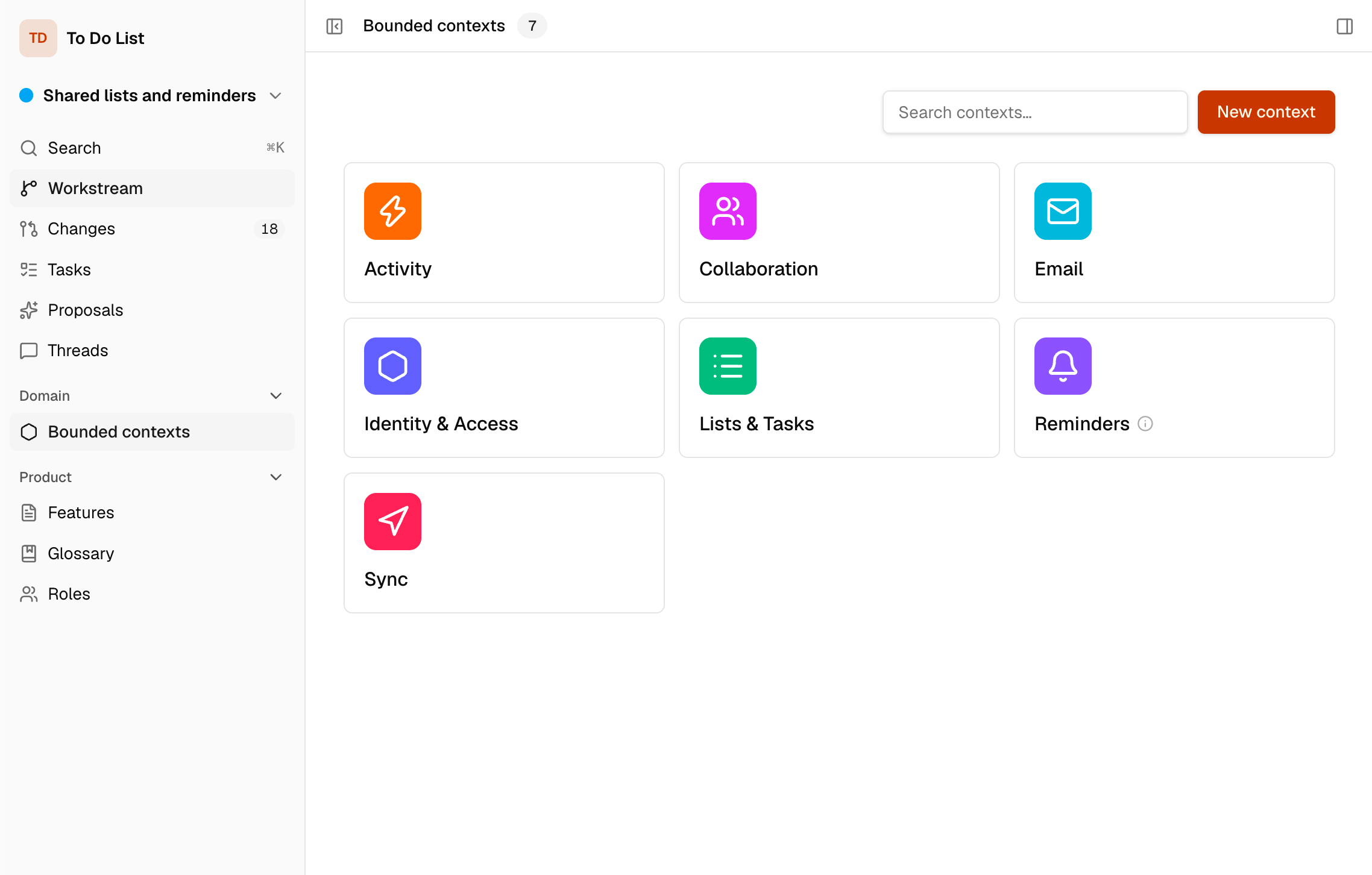
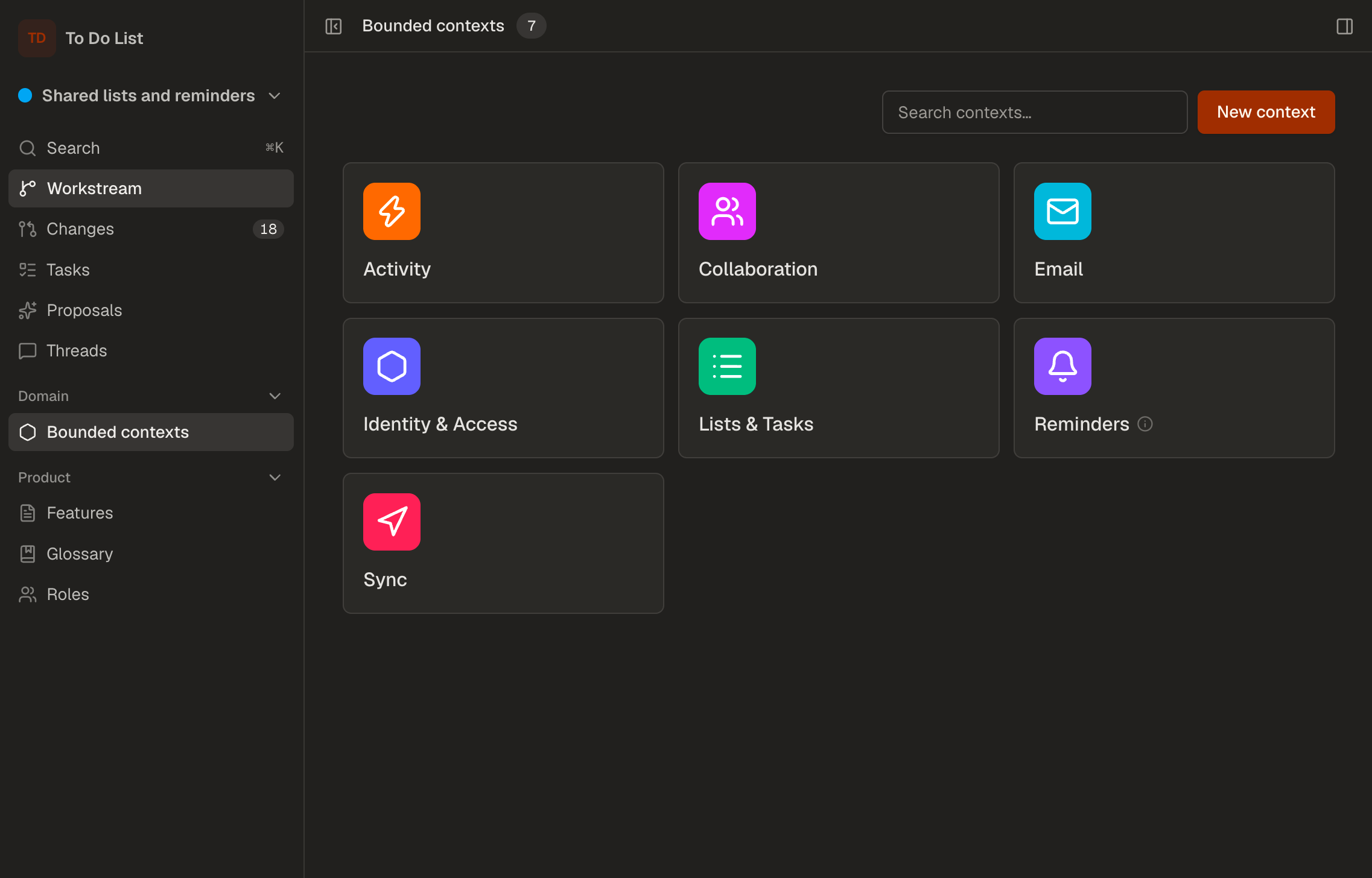
Traditional specs go stale as your system evolves.
Agentic engineering helps teams ship code faster than ever but decisions are still scattered across chats, tickets and plan.md files.
You can't read through 1000's of lines of markdown files for every change, but your agent can. Unruly markdown files can hide outdated information and conflicting requirements. This leads to poor agent performance, bugs, or simply wasted tokens as they try to understand the intent.
Specbench makes Continuous Specification the centre of your development process. Your team and their agents shape one living model of the system and build from it together.
Collaborate with your agents
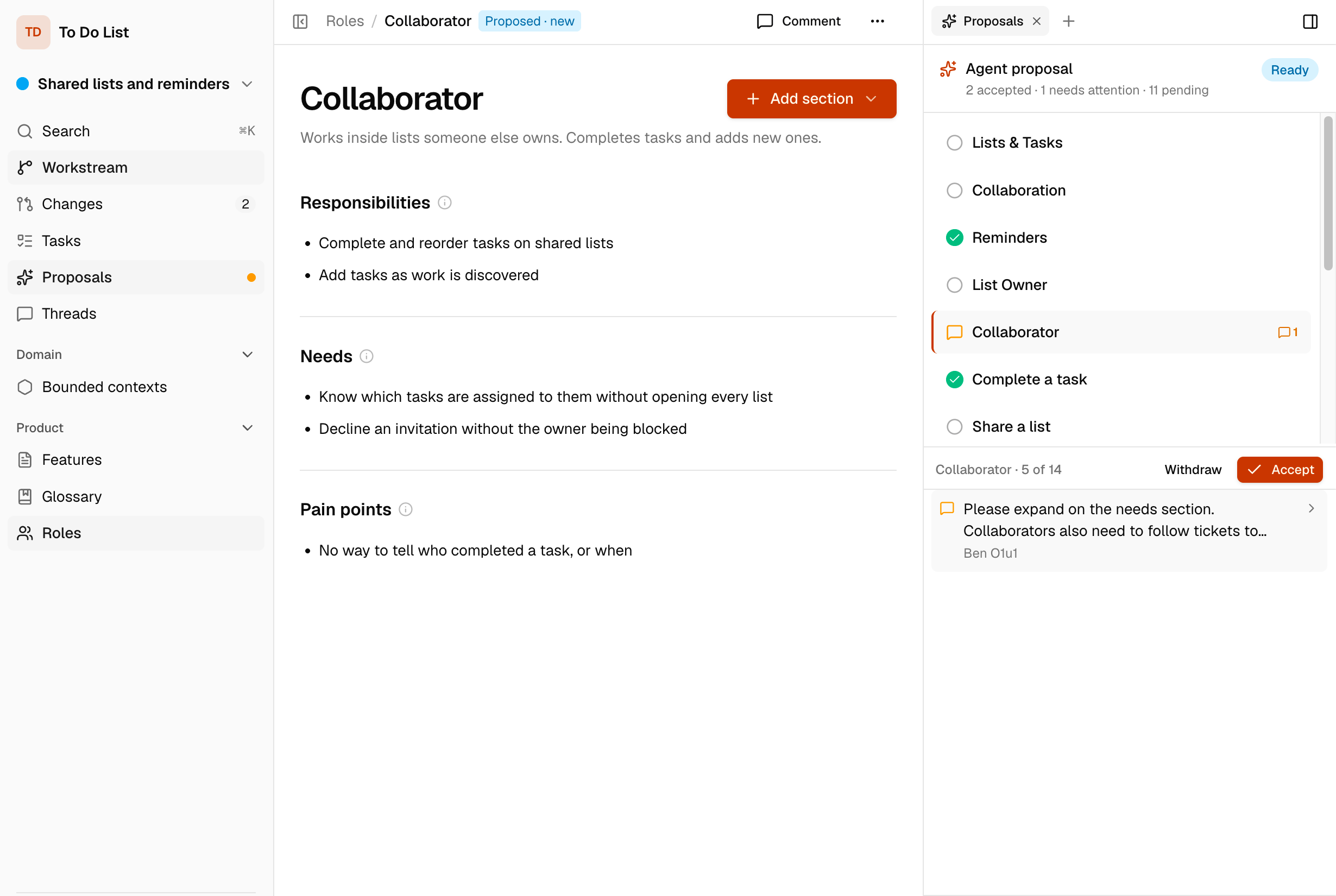
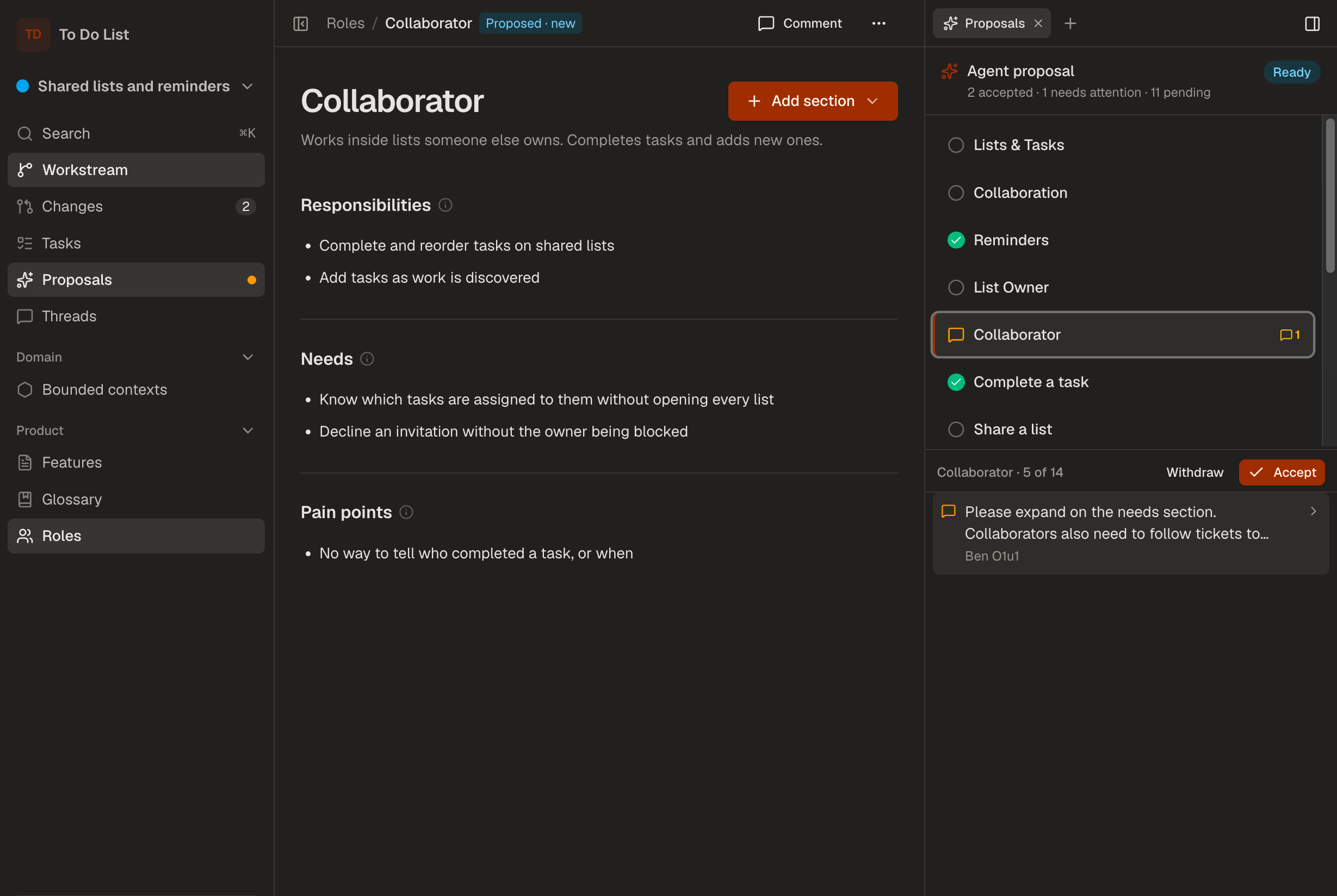
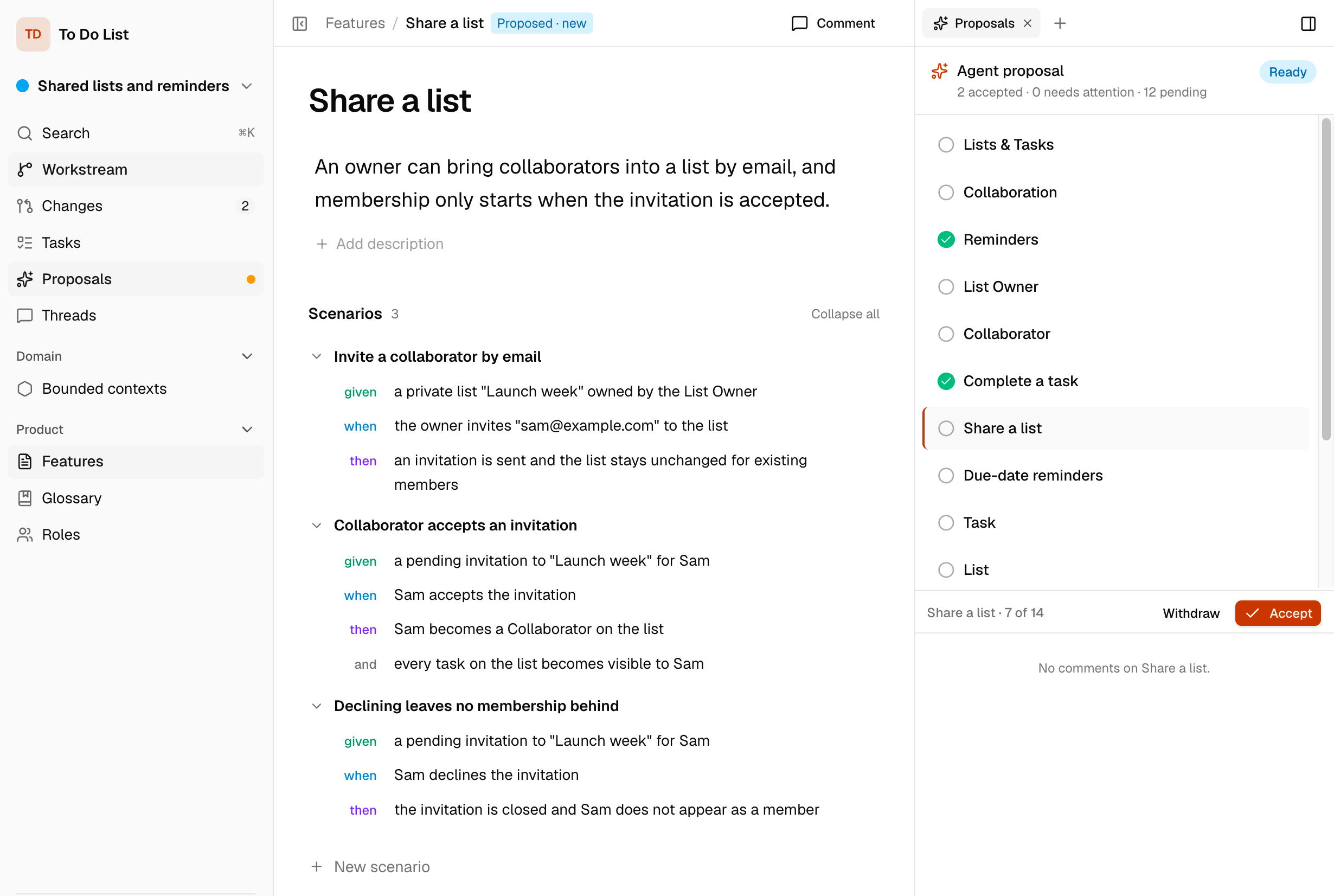
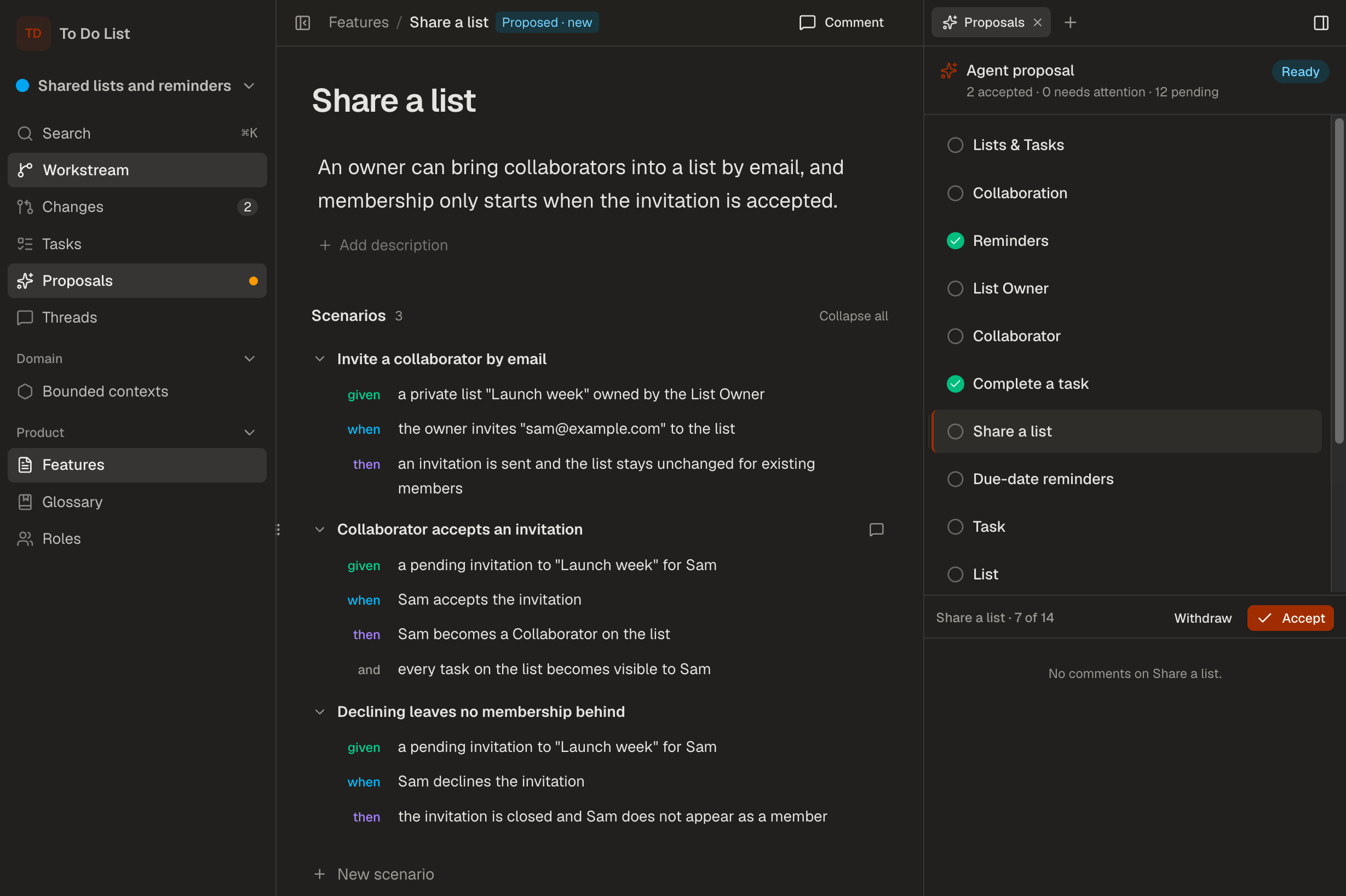
Your coding agents work in the same workspace as your team, through MCP. They propose changes to the model, raise questions, and map the system you already have.
Define clear requirements
Capture features, behaviour and domain language as one structured model. Product and engineering read the same words and mean the same things, with no scattered documents to reconcile.
Publish to your repo
The current spec lands in your repo, versioned beside the code. Developers and their agents implement from the same source of intent, and the model evolves as decisions change.
Built for how specs actually change.
The system map
Model the whole system and in a navigable map, with clear requirements that everyone can understand.
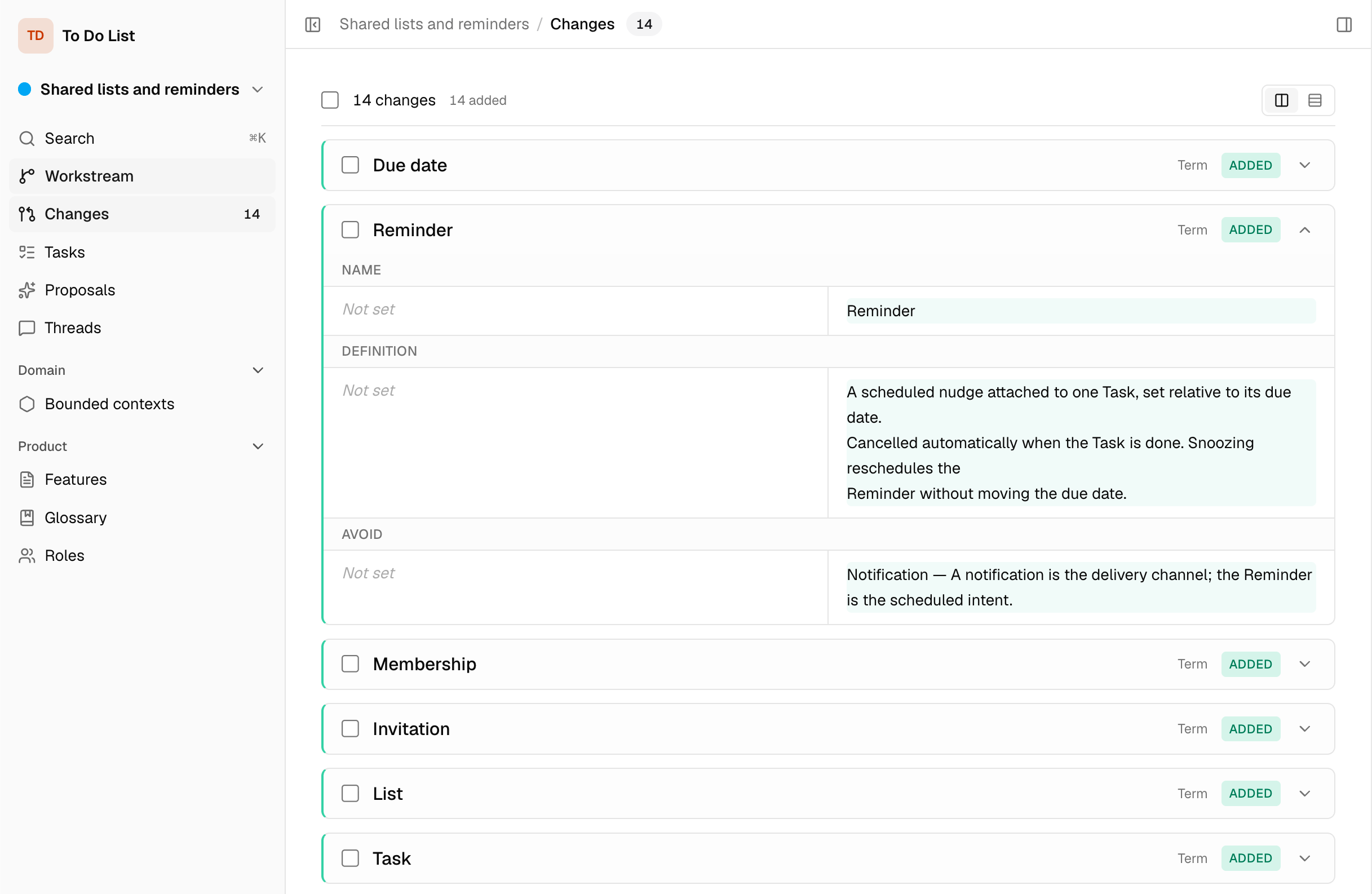
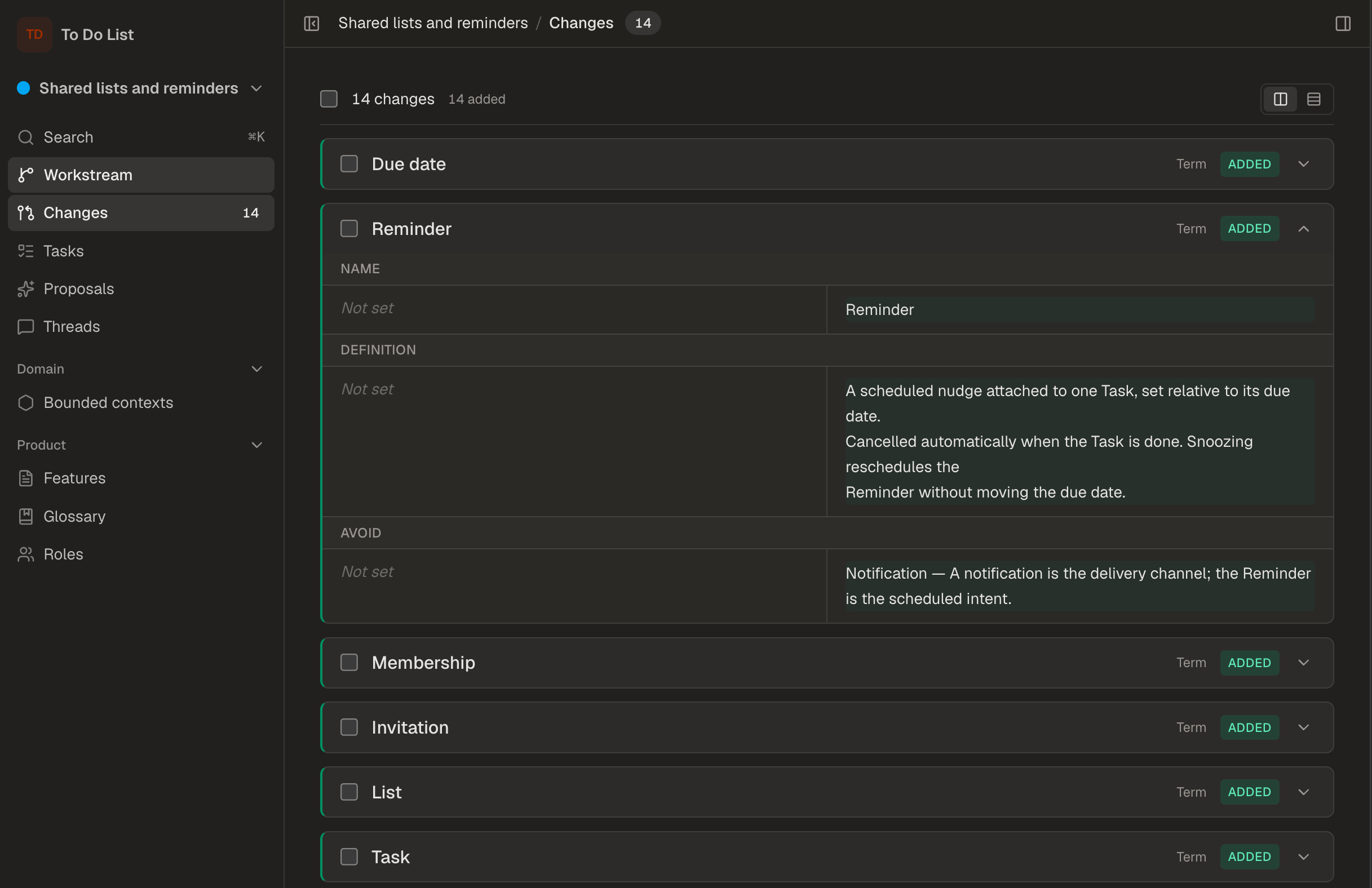
Shared language
A glossary bound to the model that enables clear communication for everyone.
Workstreams and tasks
Worksteams and tasks enables you to view the value stream and empowers Continuous Specification.
Collaborative review
Review changes with workstream threads and provide bulk feedback to your team and agents in one place.
Decisions that survive
Decision points are the place to raise adhoc questions against a workstream and capture the reasoning behind decisions.
Versioned in your repo
Publish the versioned spec to GitHub so developers and agents have clear requirements close to the code.
Any MCP-compatible agent works directly on the model.
Specbench works on a Bring Your Own Agent model. This means you can work with your existing tools through token efficient MCP tools.
Agents are first class citizens in Specbench. They work in the same workspace as your team, and can propose changes to the model, raise questions, and help you to define requirements.
A spec your team and their agents can trust.
Open source, self-hostable or fully managed, Specbench is the platform to accelerate Agentic Engineering.
14 days free. No card required. Cancel anytime.